Corrugated boxes for e-commerce: ply, size, and cost per shipment
Packaging · 26 August 2026 · 5 min read
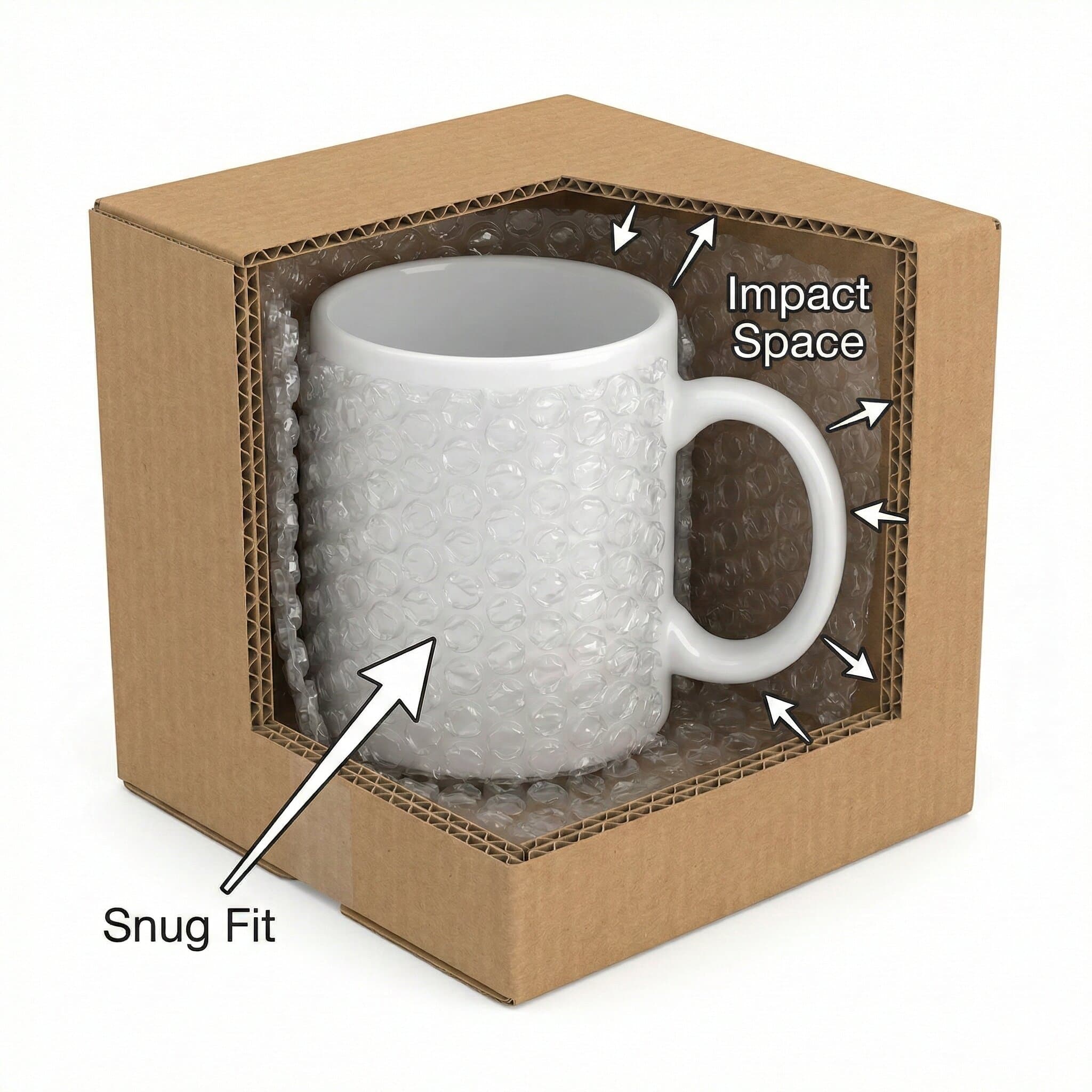
The 30-second version: Use 3-ply board for anything under 5 kg, size the box just 1–2 cm bigger than the product on each side, and make sure nothing moves when you shake it. That one paragraph is most of the money.
Now, here's a scene every seller knows. You weighed your parcel at 200 grams and priced the shipping in your head. Then the courier invoice arrives — billed at half a kilo. Nothing extra went into the box. So what happened?
The courier isn't weighing your box. It's measuring it.
Indian couriers charge you on whichever is higher — the actual weight, or something called volumetric weight (length × width × height in cm, divided by 5000 — in plain words, how much space your parcel hogs in the truck). A box just 2 cm larger on each side of a 2×2×6 inch product can push a 200 g shipment into the next billing slab. The invoice surprise wasn't the product. It was the air around it.
The rule that protects you: product dimensions plus 1–2 cm of protective clearance per side, no more.
So — 3-ply or 5-ply?
Ply is just the number of paper layers. 3-ply (one wavy "fluted" layer between two flat liners) comfortably handles products up to roughly 3–5 kg — apparel, cosmetics, books, most D2C parcels. 5-ply adds a second fluted layer for the heavy and the fragile: glassware, bulk orders above 5 kg, anything that gets stacked in transit.
Here's the trap: 5-ply feels "safer", so sellers upgrade everything. But using 5-ply where 3-ply suffices buys you nothing except a heavier, bulkier box — which, as we just saw, is exactly what the courier bills you for.
The shake test
Seal the box. Shake it. If the product moves, that's the sound of your damage claims — movement in transit is the top cause of broken products. Fill the gaps with crumpled kraft paper or bubble wrap, or drop to a smaller box. And a good honesty check: if more than a third of the box is filler, the box is wrong, not the filler.
What's GSM, and should you care?
GSM (grams per square metre) is the paper weight of the flat liners — higher GSM means stiffer walls and better stacking strength. For standard e-commerce parcels, 120–150 GSM liners on 3-ply are the workable norm. Go higher only for heavy contents or humid-route shipping, because moisture quietly softens board.
So what should you do?
Can I reuse boxes? Structurally, yes — for one careful cycle. But crushed flutes lose most of their protection, and a creased box undoes an otherwise premium unboxing.
Brown or white? Brown kraft is cheaper and hides scuffs; white prints brighter but costs more and shows every handling mark. Most small brands land on brown box + printed sticker, and honestly, that's the right call.
Tape or self-lock? Self-locking mailer boxes look premium and need no tape, but cost more per unit. A regular slotted box with 48 mm BOPP tape is still the cheapest reliable seal. Neither choice will make or break you — the sizing will.
Shop what this guide covers
QC-checked, factory-direct, GST invoice on every order.